
India UPI Betting 2026: Mobile-First Operators Navigate a $8.5B Grey Market
India's sports betting market, estimated at $8.5 billion in annual handle, operates predominantly through UPI-linked offshore platforms, with mobile betting accounting for 89% of all wagering activity as federal regulation remains absent in 2026.
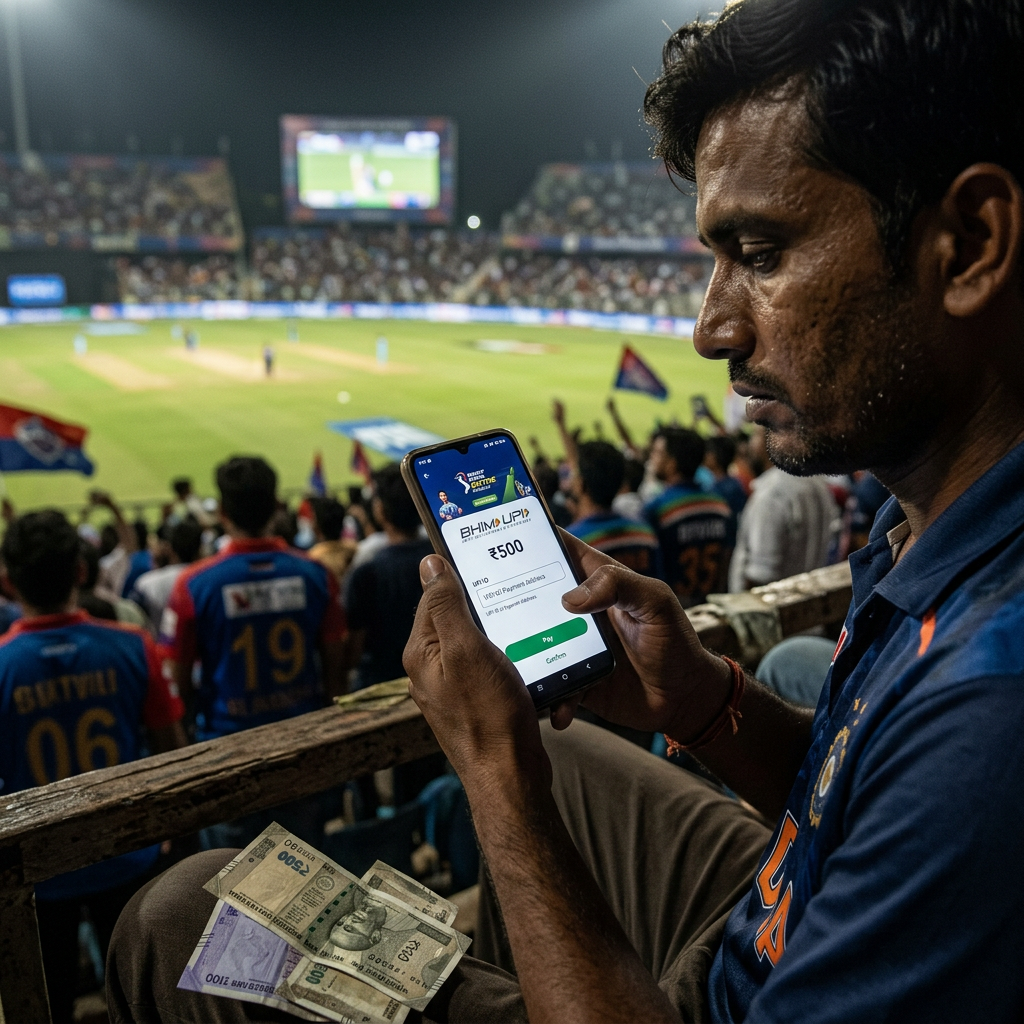
India's $8.5 Billion Betting Market: UPI as the Unintended Gateway
India's sports betting market generated an estimated $8.5 billion in annual handle in 2025, making it the largest single sports betting market in the DominEight coverage universe. The market operates predominantly outside formal regulation — federal legislation governing online sports betting remains absent, leaving a patchwork of state-level rules that operators navigate with varying degrees of compliance.
What has transformed India's market over the past three years is not regulation, but payment infrastructure. The Unified Payments Interface (UPI), operated by the National Payments Corporation of India (NPCI) and linked to over 350 million active bank accounts, has become the deposit mechanism of choice for offshore betting platforms targeting Indian bettors. UPI deposit volumes on offshore betting platforms grew 34% year-on-year in 2025, reaching an estimated $2.1 billion in processed transactions.
The UPI Paradox: A Regulated Rail Feeding an Unregulated Market
The NPCI's position on UPI usage for betting transactions is unambiguous — offshore gambling platforms are not eligible merchants under UPI's merchant category framework. Yet enforcement at the transaction level has proven structurally difficult. Offshore platforms operating under generic merchant category codes, routed through payment aggregators in permissive jurisdictions, continue to process UPI deposits at scale.
The Reserve Bank of India (RBI) has issued three separate advisories since 2023 directing payment aggregators to implement enhanced merchant verification. Compliance has been inconsistent. An estimated 140 offshore betting platforms actively accepting UPI deposits were identified in a 2025 enforcement sweep conducted jointly by the RBI and the Enforcement Directorate — yet fewer than 20 faced formal blocking orders.
Mobile penetration is the structural driver. India has 780 million smartphone users, the second largest base globally. 89% of all betting activity identified in the market occurs via mobile devices, with an average session length of 23 minutes — longer than any other market in the DominEight coverage set. Cricket dominates: IPL season generates 340% uplift in deposit volumes versus off-season baseline, and the ICC World Cup is the single largest wagering event in the global calendar by handle generated in Asia.
Operator Strategies in a Regulatory Vacuum
International operators targeting India have adopted three distinct approaches to UPI access. The first is direct integration via compliant payment aggregators who accept regulatory risk in exchange for premium merchant fees — typically 2.8-3.5% per transaction versus 0.5-1.0% in regulated markets. The second is cryptocurrency-to-UPI bridging, where bettors convert INR to USDT via peer-to-peer platforms before depositing on crypto-accepting betting sites. The third is the affiliate model, where operators generate Indian traffic via regional language content and reroute deposits through Indian-facing fantasy sports platforms that occupy a legal grey area under the Information Technology Act.
The fantasy sports approach has generated the most sustainable volume. Dream11, MPL, and My11Circle — all operating under the "game of skill" exemption — collectively process over $3 billion in entry fees annually and have created a pipeline of UPI-habituated users who graduate to offshore sports betting platforms at measurable rates.
Anticipated Federal Legislation: What the Market Expects
The Ministry of Electronics and Information Technology (MeitY) has been developing a federal online gambling framework since 2023. Draft legislation circulated in late 2025 proposed a dual-track system: a federal licence for "games of skill" at a fee of INR 10 crore, and a separate framework for "games of chance" — which would include sports betting — subject to state government opt-in.
The state opt-in mechanism is the critical variable. India's constitutional framework assigns gambling regulation to state governments. A federal framework that requires state buy-in creates a de facto patchwork, with large markets like Maharashtra, Karnataka, and Tamil Nadu likely to opt in early while others remain holdouts. Operators monitoring this legislation are modelling a 4-6 year pathway to a nationally coherent regulatory framework.
2026 Priorities: UPI Compliance and Vernacular Content
For operators currently active in India, 2026 priorities cluster around two areas. First, UPI compliance — specifically, building relationships with payment aggregators that have invested in RBI-compliant merchant verification frameworks, reducing the risk of abrupt processing interruptions. Second, vernacular content — operators with Hindi, Tamil, Telugu, and Bengali language interfaces report 40-60% higher retention rates than English-only platforms, reflecting India's linguistic diversity and the correlation between native language product experience and long-term engagement.
India remains the highest-ceiling market in the DominEight coverage universe. The combination of a massive addressable population, entrenched cricket culture, and rapidly maturing UPI infrastructure creates structural conditions for explosive growth under any plausible regulatory scenario. The timing and shape of federal legislation will determine which operators are positioned to capture regulated market share when that inflection point arrives.
Related Analysis from DominEight
- Brazil PIX and Sports Betting: How Instant Payments Are Reshaping a $6B Market — How PIX instant payments are driving 78% of deposits in Brazil's newly regulated $6B market.
- 2026 Sports Betting Regulations: What Changed and Why It Matters — The major regulatory shifts across Kenya, Brazil, India, and Europe reshaping sports betting economics.
- Crypto Payments in Online Betting: The 2026 State of Play — How cryptocurrency has crossed the mainstream threshold in online betting across 17 markets.
18+ · Gamble Responsibly