Global Betting Regulations 2026: Country-by-Country Impact Analysis
Regulatory changes across DominEight's 17 markets in 2025-2026 have reshaped operator access, player protections, and market economics. Here is the complete impact analysis.
Global Betting Regulations 2026: Country-by-Country Impact Analysis
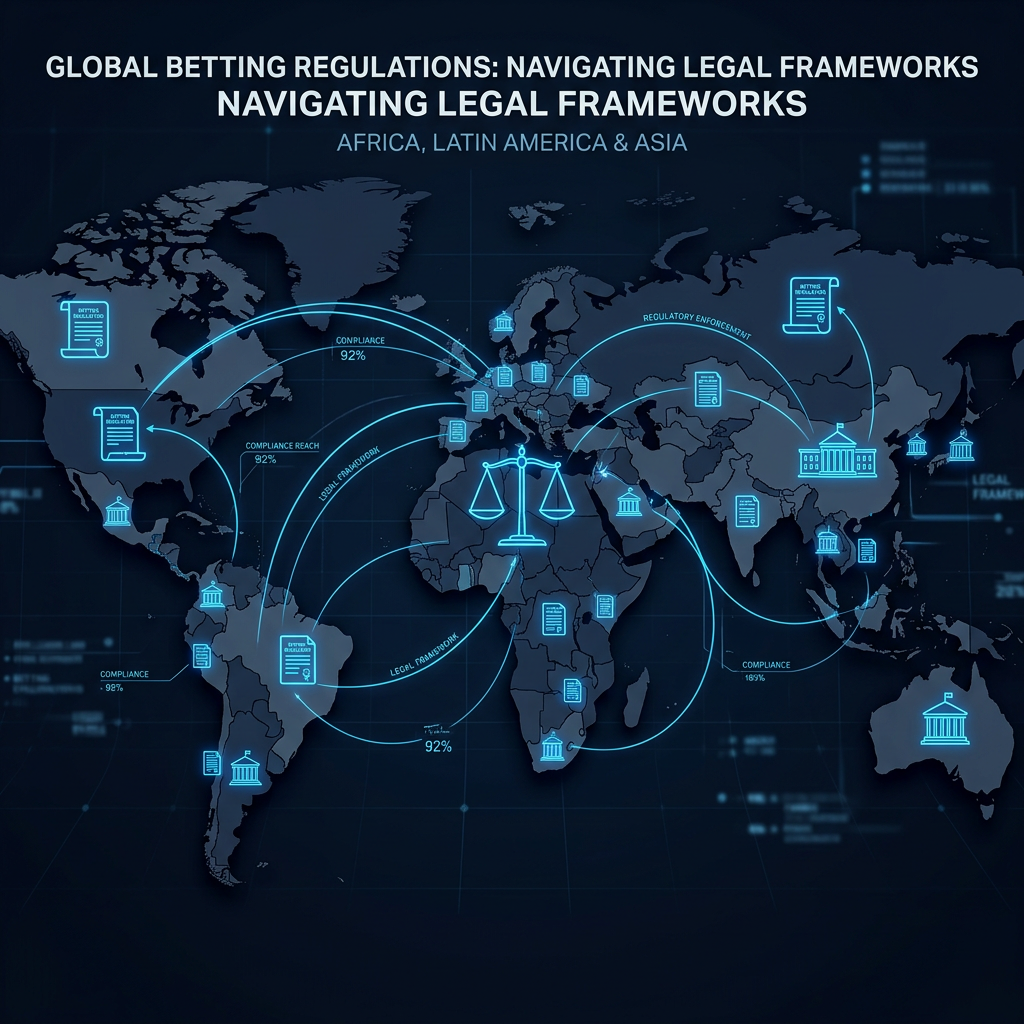
The pace of online betting regulatory change accelerated in 2025 and has continued into 2026, with meaningful framework developments across multiple markets in DominEight's coverage universe. The direction is consistent globally — more formal licensing, tighter consumer protections, and higher compliance costs — but the implementation details, enforcement intensity, and market consequences vary substantially by jurisdiction.
This analysis covers the regulatory developments with the highest practical relevance for bettors in Africa, Latin America, and Asia.
Africa
Nigeria
Nigeria's National Lottery Regulatory Commission issued updated operator guidelines in Q4 2025 that took effect in January 2026. The most consequential change is a data localisation mandate requiring licensed operators to store Nigerian player data on servers physically domiciled in Nigeria or within the ECOWAS region.
The practical effect is a compliance investment requirement for international operators — building or contracting local data infrastructure is not trivial. Smaller operators may find the cost prohibitive, potentially consolidating the market toward larger players with the capital to comply.
Player-facing changes are more positive. The NLRC also mandated enhanced KYC at deposit thresholds above ₦500,000 monthly and required licensed operators to integrate self-exclusion with the national responsible gambling registry.
Kenya
Kenya's regulatory reform is the most market-moving development in African betting in the past two years. The Betting Control and Licensing Board restructured the operator tax framework effective January 1, 2026, reducing withholding tax on winnings from 20% to 7.5%.
The impact has been immediate and measurable. Operators who maintained Kenyan licences through the high-tax period have resumed active customer acquisition marketing. International operators that had exited the market are re-evaluating re-entry. And — critically for consumer welfare — the tax reduction has reduced the economic incentive for Kenyan bettors to use unlicensed offshore platforms to avoid the withholding.
The reform package also introduced mandatory responsible gambling features as licence conditions and increased minimum odds requirements for licensed sports betting to 1.2.
Ghana
Ghana's Gaming Commission tabled amendments to the Gaming Act in Q1 2026 that would introduce a tiered licensing structure distinguishing sports betting from other gambling verticals. The amendments are pending parliamentary ratification. If enacted, the tiered structure would simplify the compliance pathway for sports-only operators while imposing higher requirements on full-service casino licensees.
Tanzania and Uganda
Both markets maintained their existing frameworks in 2025–2026, with incremental enforcement actions against unlicensed operators. Tanzania's Gaming Board conducted platform audits of its licensee roster; Uganda's National Gaming Board issued guidance on mobile money integration requirements. Neither market saw fundamental framework changes.
Latin America
Brazil
Brazil's SIGAP framework — covered in detail in DominEight's dedicated Brazil regulatory guide — is the headline development in Latin American betting regulation. Key 2026 milestones include the finalisation of bonus disclosure rules, the clarification of PIX payment eligibility for licensed operators, and the publication of supplementary advertising standards restricting celebrity endorsements and broadcast timing.
The Brazilian framework is now mature enough to support long-term operator investment decisions, and the pipeline of SIGAP licence applications from international operators reflects that assessment.
Mexico
Mexico's betting market operates under a federal framework administered by the Secretaría de Gobernación. The existing framework is permissive by regional standards — operators with physical presence licences can offer online sports betting to Mexican players. The primary regulatory development in 2025–2026 is increased enforcement against unlicensed offshore operators, with ISP-level domain blocking applied to several non-compliant platforms.
For players, the practical effect is a gradually improving licensed operator landscape as compliant platforms gain market share from blocked offshore alternatives. SPEI instant payment integration has improved deposit and withdrawal speed for licensed operators.
Argentina
Argentina's sports betting market is regulated at the provincial level, resulting in a fragmented licensing landscape. Buenos Aires Province and the City of Buenos Aires have the most developed frameworks; interior provinces range from permissive to effectively unregulated. The peso's chronic volatility continues to influence betting economics — many players use USD-denominated offshore platforms to avoid currency exposure on held balances.
Asia
India
India's regulatory picture is defined by the federal-state divide. The central government has not enacted federal sports betting legislation. State-level frameworks vary from the liberal gaming licences of Goa and Sikkim to outright prohibitions in states that have enacted gambling acts.
The Information Technology (Intermediary Guidelines and Digital Media Ethics Code) Rules 2021 provide a framework for online skill gaming platforms, but fixed-odds sports betting remains unaddressed at the federal level. Operators serving Indian players do so through offshore licences — primarily Malta, Curaçao, and Isle of Man — with UPI and IMPS deposits frequently declining due to bank-level restrictions.
The most significant India-specific development in 2025–2026 was PUBG Mobile's continued consolidation in the mobile gaming market, driving esports betting engagement on international platforms.
Pakistan and Bangladesh
Neither market has a licensing pathway for online sports betting. Both maintain official positions of prohibition, with active payment processor blocking and periodic ISP-level restrictions on betting platform access. Crypto payments and VPN access are the primary mechanisms players use to circumvent these restrictions.
DominEight's coverage of operators serving Pakistan and Bangladesh is limited to platforms with credible offshore licensing and demonstrable player protection practices, given the absence of domestic regulatory protection.
Sri Lanka
Sri Lanka is the most promising regulatory development story in South Asian betting. The government's tourism and hospitality revenue strategy has included sports betting regulation as a policy consideration, and a formal consultation process is expected in H2 2026. If enacted, Sri Lanka would become the first South Asian market with an accessible sports betting licence for international operators — a meaningful development for the region's regulatory trajectory.
The Global Pattern
Across all of DominEight's covered markets, the regulatory direction is toward formalisation — more licensing, more consumer protection, more compliance cost. The net beneficiary of this trend is the informed bettor in markets where enforcement is effective: fund segregation, dispute resolution, and responsible gambling infrastructure all improve as frameworks mature.
The risk — which remains material in several DominEight markets — is that regulatory frameworks exist on paper but enforcement is limited, creating a false sense of security for players using nominally licensed platforms that do not actually comply with their licence conditions. DominEight's testing methodology includes withdrawal testing and support response evaluation precisely because regulatory compliance on paper does not guarantee operational compliance in practice.
Related Analysis from DominEight
- 2026 Sports Betting Regulations: What Changed and Why It Matters — The specific regulatory changes in Kenya, Brazil, India, and Europe and their market consequences.
- Kenya Mobile Betting 2026: M-Pesa Dominance and BCLB Regulatory Shifts — Kenya's BCLB framework deep-dive: M-Pesa compliance, withdrawal timelines, and tiered licensing plans.
- Brazil Sports Betting Regulations 2026: The Complete Player Guide — Brazil's SIGAP licensing framework — the most consequential regulatory development in Latin American betting.
18+ · Gamble Responsibly